Speakers
LIFES Conference - 2 july 2025 - Poortgebouw Leiden

Robbert Dijkgraaf
Robbert Dijkgraaf is university professor of Science and Society from an International Perspective at the University of Amsterdam and president-elect of the International Science Council. He served as Minister of Education, Culture and Science of the Netherlands from 2022-2024. Dijkgraaf’s research focuses particularly on the interface between theoretical particle physics and mathematics, a blossoming field that has led to many unexpected breakthroughs in both disciplines.
Dijkgraaf has a long track record in science policy and advice, as president of the Royal Netherlands Academy of Arts and Sciences (2008-2012), chief science advisor to the Dutch government, and in the Innovation Platform, advising the cabinet on research and innovation policies. He was co-chair of the InterAcademy Council (IAC), serving from 2009 to 2017 and co-president of the InterAcademy Partnership (IAP) from 2014 to 2017. As director and Leon Levy Professor of the Institute for Advanced Study (IAS) in Princeton, New Jersey (2012-2022), he stewarded one of the world’s foremost centres for theoretical research and intellectual inquiry.
During his academic career Dijkgraaf has been very active in science communication and public engagement.
Dijkgraaf is a (foreign) member of the American Academy of Arts and Sciences, the American Philosophical Society, the Royal Society of Edinburgh, the Academia Europaea and the Royal Flemish Academy of Belgium for Science and the Arts, and was an ISC Fellow in 2023.

Lise Korsten
Lise Korsten is President of the African Academy of Sciences and the Co-Director of the Department of Science and Innovation, Centre of Excellence in Food Security. She is also responsible for the food safety and regulatory control programmes within the DSI-NRF Centre of Excellence in Food Security and actively interacts with other researchers in various institutes. She holds the position of chair in the Global Task Force of Food Security for the International Society for Plant Pathology. Prof Korsten has addressed the South African Parliament on Food Safety Control and has developed a national framework for government to develop a Food Control Authority.
She has been able to attract extensive national and international long term funding such as the Water Research Commission solicited research projects “Measurement of water pollution determining the sources and changes of microbial contamination and impact on food safety from farming to retail level for fresh vegetables”, “An investigation into the link between water quality and microbiological safety of fruit and vegetables from the farming to the processing stages of production and marketing” and “Evaluation of the risks associated with the use of rain water harvested from roof-tops for domestic use and homestead food gardens, and groundwater for domestic use and livestock watering”, as well as the 7th EU Framework project “Impact of climate change and globalisation on safety of fresh produce - governing a supply chain of uncompromised food sovereignty.
Korsten developed South Africa's first biocontrol agent for fruit and established a biocontrol research group at the University of Pretoria (1992). She has also established a fresh produce health group that focusses on food safety of fresh produce and on Sanitary and Phytosanitary aspects related to international trade.
Korsten has focussed her research mainly on the complementary fields of postharvest technology and food safety as related to international trade in fresh produce. As a team the Plant Health and Safety research group has been able to develop several innovative technologies to reduce disease and prevent product contamination. The value of her research programmes (Produce Quality and Safety (PQS) and Postharvest Innovation Research) is best illustrated by sustained industry financial support, intensive student training and publications. Korsten has established a core of researchers and support staff that has been with her for the past 20 years totally funded by the Industry. She has supervised 51 MSc students, 20 PhD students and 11 Postdocs.

Robert-Jan Smits
Robert-Jan Smits is the Chairman of the Supervisory Board of Naturalis, the natural history museum and biodiversity research center in The Netherlands as well as of the SieboldHuis. Next to this, he is member of several national and international supervisory and advisory bodies such as the Netherlands National Growth Fund Committee, the Senat of the Leibniz Gemeinschaft (Germany), the Hochschulrat of the Ludwig Maximilian University (Germany), the Board of Trustees of the Cyprus Research and Educational Foundation (Cyprus), the Icelandic Science and Innovation Council (Iceland), the International Advisory Board of the Research Council of Norway (Norway).
Smits was the President of the Eindhoven University of Technology (2019-2025) where he transformed the university to become a showcase of the Fourth Generation University concept, an orchestrator of a flourishing innovation ecosystem: Brainport Eindhoven. Prior to his assignment in Eindhoven, he was the Director-General of Research and Innovation at the European Commission (2010-2018). In this capacity he was the architect of Horizon 2020, the 80 billion EU Research and
Innovation program. Smits was also instrumental in shaping the successor program Horizon Europe (budget: 95 billion). In his last year in Brussels (2019), Robert-Jan Smits was the Open Access Envoy of the European Commission and developed concrete policy proposals aimed to ensure that all academic publications resulting from publicly funded research are widely available and accessible through Open Access. Throughout his career, Smits has been involved in numerous national and international science and innovation policy reviews.
Smits has received several recognitions and awards for his contribution to European science and innovation. He received the Academy Medal of the Royal Dutch Academy, the Gold Medal from Academia Europaea, the Graphene Award of ESOF, the Lifetime Achievements Award of EuroScience, the Excellence in Global Science Award in South Africa, the Medal of Honour of the KU Leuven. He was part of “ Nature’s 10 “, holds an honorary degree from Edinburgh University, is a honorary member of Academia Europaea and is a fellow of the Koninklijke Hollandsche Maatschappij der Wetenschappen.

Esther Peters
Esther Peters is the Director of the Leiden Bio Science Park Foundation (LBSP), the Netherlands' largest life sciences and health innovation district. She assumed this role on October 1, 2023, succeeding Ida Haisma. With a background in law from Utrecht University, Peters has built a distinguished career spanning corporate, academic, and governmental sectors. Her previous positions include roles at Loeff Claeys Verbeke, VNU Business Publications, Achmea, Erasmus University, and the municipalities of Leiden and Oegstgeest. Notably, she served as the director of the NL Space Campus in Noordwijk, transforming it into a leading European space hub with a vibrant, internationally oriented innovation ecosystem.
In her current role at LBSP, Peters is dedicated to advancing the park's mission of fostering innovation in life sciences and health. She emphasizes the importance of collaboration among academia, industry, and government to drive breakthroughs in areas such as regenerative medicine, vaccines, and data-driven health solutions. Under her leadership, LBSP continues to grow as a global hotspot for life sciences, housing over 470 organizations and accommodating more than 22,000 employees and 21,000 students.
Beyond her professional endeavors, Peters contributes to the community as a board member of Stichting Jeugd en Samenleving (JES) Rijnland and the healthcare organization ActiVite. Peters' leadership at LBSP reflects her commitment to innovation, collaboration, and the advancement of health sciences on both national and international stages

Nico van Meeteren
Nico van Meeteren is a prominent figure in the Dutch health and innovation landscape, serving as the Executive Director and Secretary General of the Topsector Life Sciences & Health (Health~Holland). In this capacity, he leads national efforts to foster public-private partnerships and drive mission-driven innovation aimed at enhancing health and care across the Netherlands.
In addition to his leadership at Health~Holland, Van Meeteren holds the position of Professor of Perioperative Health at Erasmus MC in Rotterdam. His academic work focuses on the development, implementation, and evaluation of scientifically substantiated health interventions, particularly those addressing physical, mental, and social functioning challenges during major life events in vulnerable populations.
Van Meeteren's expertise encompasses perioperative health, public-private partnerships, healthcare research transformations, and health policy. His educational background includes a Master of Education in Health Education and a PhD in Neurosciences.
Through his dual roles, Van Meeteren bridges the gap between academic research and practical healthcare innovation, contributing significantly to the advancement of health sciences and the improvement of healthcare systems in the Netherlands.

Peter Verkoulen
Peter Verkoulen has been working at the interface of content, commerce, development and management in ICT for over 30 years. He is the programme director of the Centre of Excellence for Data Sharing & Cloud. From this CoE-DSC, there is close cooperation with amongst others Gaia-X, IDSA, DSSC, Simpl and the AIC4NL.
Until the end of 2022, he was the coalition manager of the Dutch Blockchain Coalition. Before that, he was CEO of the Brightlands Smart Services Campus for over 4 years. With his team, he built an ecosystem from the ground up of large companies and institutions, SMEs, startups, students and scientists who innovate together in the field of digital transformation. Blockchain and artificial intelligence are important technology domains within the BSSC. Before that, Verkoulen worked for a long time on large outsourcing projects: in terms of content, commercially and as a management manager.
His substantive basis is formed by a study of Computer Science (with a minor in Business Administration) at the Eindhoven University of Technology, a PhD program at the same university, and a number of scientific positions after his PhD at the universities of Eindhoven, Twente and Maastricht.
He currently works as an ecosystem builder, business developer, interim manager, copywriter, speaker and moderator from his own BV: Petros Business Development BV.

Jean-Claude Burgelman
Jean-Claude Burgelman is emeritus professor social sciences at the Free University of Brussels. He retired in 2020 from the European Commission Brussels where he was in charge from 2014 onwards, of Open Science at the Diretorate General for Research and Innovation. His team developed the EC’s polices on open science, the European Open Science Cloud, open data and open access. He joined the European Commission in 1999 as a Visiting Scientist in the Joint Research Centre where he was in charge of socio-economic research on digital technologies. In January 2008, he moved to the Bureau of European Policy Advisers (attached to the president of the EC) and one year later joined DG RTD, where he created top level advisory boards like the European Research and Innovation Area Board, the Innovation for Growth Group and the European Forum for Forward Looking Activities. All these groups contributed to the design of the EC’s huge Framework programs for research and innovation.
Till 2000 he was full professor of communication technology policy at the Free University of Brussels, as well as the founding director its research Centre for Studies on Media, Information and Telecommunication. He has been visiting professor at the University of Antwerp, the European College of Brughes and the University of South Africa and sits on several academic journals. He chaired the World Economic Forum’s Global Agenda Council on Innovation and was a member of its Science Advisory Committee.
He recently joined the advisory board of Open Knowledge Maps, Scimagine and became the editor in chief of Frontiers Policy Lab. In 2022 he became the director of the Frontiers Planet Prize, a global competition to ignite science that can save the planet.
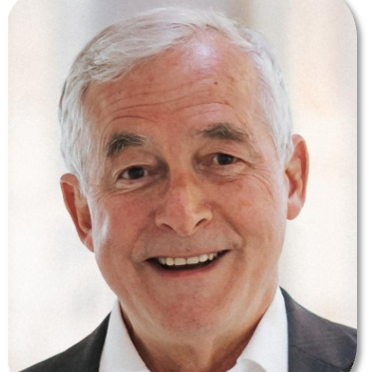
Karel Luyben
Karel Luyben is Rector Magnificus Emeritus of the Delft University of Technology as of 2018. He was Rector Magnificus of the Delft University of Technology from 2010 till 2018. Before that he served as Dean of the Faculty of Applied Sciences for almost 12 years.
In 1983 he was appointed full professor in Biochemical Engineering at the Delft University of Technology, and from there has gained experience in research, starting a SME, research leadership and leading European organisations like the European Federation of Biotechnology, CESAER and now the European Open Science Cloud Association.
Presently he is primarily active in the domain of Open Science. Until 2023 he was National Coordinator for Open Science in the Netherlands. He was the Chairman of the Board of the Dutch Techcentre for Life Sciences for ten years and is involved with the Open Science Task Forces of CESAER and EUA and since 2020. Since 2021 he is the President of the European Open Science Cloud Association (EOSC-A).
Throughout his career, he has provided and continues to provide consultation services to research organisations, industries and governments in the areas of Technology and Strategy & Policy.